Starting a Photo Restoration Business in 2026
Learn how to start a profitable photo restoration business in 2026 using AI tools. Complete guide with pricing and marketing.
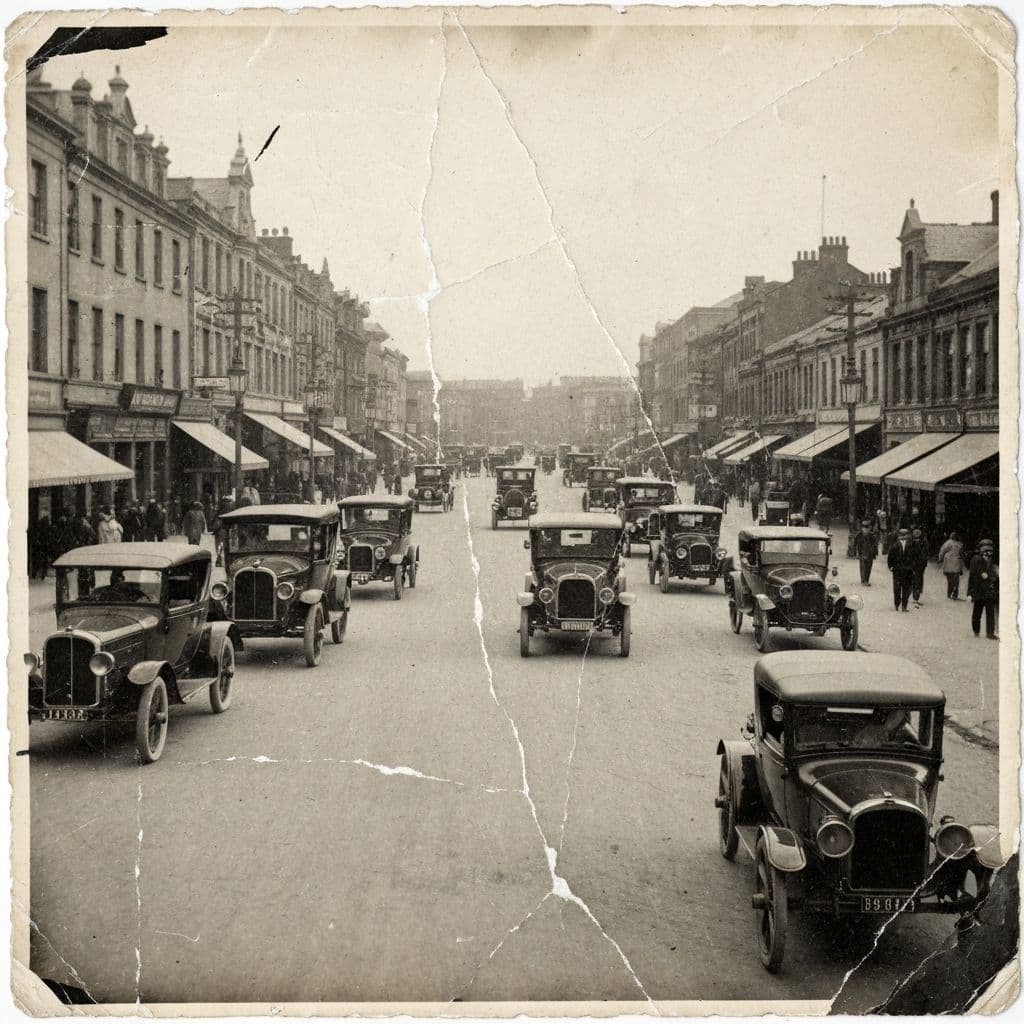
The Opportunity No One Is Talking About
There are approximately 3.5 trillion photographs in existence. Billions of those are old, damaged, fading, or deteriorating in boxes, albums, and drawers around the world. Every single one of them belongs to someone who cares about it — someone who would pay to have it restored if the service was available, affordable, and easy to access.
Welcome to the photo restoration business in 2026 — a market that is growing rapidly, has remarkably low barriers to entry, and offers margins that would make most service businesses envious. The emergence of AI restoration tools has transformed what was once a niche, high-skill profession into an accessible business opportunity that almost anyone can start with minimal investment.
If you are looking for a side hustle, a freelance career, or even a full-time business, photo restoration deserves your serious attention. This guide covers everything you need to know to get started.
Why the Market Is Growing
Several trends are converging to create unprecedented demand for photo restoration services:
The Genealogy Boom
Genealogy is consistently one of the most popular hobbies in the world. Services like Ancestry, 23andMe, and FamilySearch have brought millions of new people into family history research — and they all want to see what their ancestors looked like. Our guide on photo restoration for genealogy research explores this demand in depth.
The Nostalgia Economy
Social media has created massive demand for nostalgic content. Restored and colorized vintage photos routinely go viral on platforms like TikTok, Instagram, and Facebook. People share their family's restored images, driving awareness and demand.
Aging Photo Collections
The massive wave of photographs taken between the 1940s and 1990s is now 30-80 years old. These images are reaching the point where damage becomes severe, creating urgency among families to preserve them before they are lost entirely.
AI Accessibility
Five years ago, professional photo restoration required advanced Photoshop skills and hours of manual work per image. Today, AI tools like Restory can produce professional-quality results in seconds. This has not eliminated the market for restoration services — it has expanded it by making the service economically viable at price points that attract a mass market.
Business Models That Work
Model 1: Direct-to-Consumer Online Service
How it works: You accept photos via a website or social media, restore them using AI tools, perform quality control and any necessary manual touchups, and deliver the restored images digitally.
Pricing: $15-50 per photo for standard restoration, $50-150 for complex projects (heavy damage, colorization, large prints). Package deals for multiple photos (5 for $100, 20 for $300).
Pros: Low overhead, location-independent, scalable Cons: Marketing-dependent, price competition from other online services
Model 2: Local/Event-Based Service
How it works: You offer photo restoration at local events — farmers markets, craft fairs, genealogy society meetings, veterans organizations, senior centers. You scan photos on-site and deliver restored versions by email within 24-48 hours.
Pricing: $20-40 per photo on-site. Bundle pricing for events.
Pros: Face-to-face sales are easier, emotional reactions drive referrals, less price sensitivity Cons: Time-intensive, geographically limited, seasonal
Model 3: B2B Partnerships
How it works: You partner with businesses that serve customers with old photos — funeral homes, wedding planners, genealogy researchers, museums, historical societies, senior living facilities, and photography studios.
Pricing: Wholesale rates ($10-25 per photo) with volume commitments, or revenue-sharing arrangements.
Pros: Consistent volume, repeat business, no direct marketing to consumers Cons: Lower per-photo margins, relationship-dependent
Model 4: Social Media Content Business
How it works: You create viral content by restoring interesting historical or vintage photos (public domain or with permission), building a large social media following, then monetizing through direct restoration services, brand partnerships, or courses.
Pricing: Variable — service fees, sponsorships, course sales.
Pros: Massive reach, personal brand equity, multiple revenue streams Cons: Content creation is time-intensive, algorithm-dependent, slow to build
Your Toolkit: What You Need
Essential (Under $100 to Start)
- AI restoration app — Restory at EUR 39.99/year gives you access to six professional AI features: Colorize, Enhance, Restore Faces, Remove Scratches, Recreate, and Bring Photos to Life. See the complete feature list for details.
- Smartphone — for scanning photos when clients cannot provide digital files
- Computer — for quality control, minor adjustments, and client communication
- Cloud storage — Google Drive or Dropbox for file delivery
Recommended (Under $500)
- Flatbed scanner — an Epson Perfection V600 ($230) produces professional scans at up to 6400 DPI
- Photo editing software — Adobe Photoshop ($20.99/month) or the free GIMP for manual touchups
- Calibrated monitor — accurate color is important for quality control
- Simple website — a one-page site with examples and a contact form
Professional (Under $2,000)
- Professional scanner — an Epson V850 or similar for maximum quality
- Color-calibrated monitor — a factory-calibrated display ensures accurate color
- Backup system — NAS or multiple cloud services for client data protection
- Printing partnership — a relationship with a quality print lab for physical deliveries
Pricing Strategy: The Value Equation
The most common mistake new photo restoration businesses make is pricing too low. Here is why:
Your competition is not other restoration services — it is the alternative of doing nothing. Most people who need photos restored do not compare three providers and choose the cheapest. They either decide to do it or they do not. The decision is emotional, and price is secondary to the perceived value.
A restored photograph of someone's deceased mother is not a commodity. It is priceless to the person who receives it. Pricing it at $5 devalues both the service and the emotional significance of the result.
Recommended Pricing Tiers
| Service Level | What Is Included | Price Range |
|---|---|---|
| Basic Restoration | Scratch removal + enhancement | $25-35 |
| Standard Restoration | Full restoration (scratches, faces, enhancement) | $40-60 |
| Premium Restoration | Full restoration + colorization | $60-100 |
| Complex/Heavy Damage | Multiple restoration passes + manual touchups | $100-200 |
| Animation | Bring Photos to Life video creation | $30-50 add-on |
| Print Package | Restoration + professional print + framing | $80-200 |
| Album Package | 10-20 photos restored as a collection | $200-500 |
The 10x Rule
If your restoration costs you $2 in tool costs and 5 minutes of time, a price of $40 might feel excessive. But consider: the client is paying for the result, not the process. A clear, restored photograph of a grandmother they lost twenty years ago is worth hundreds of dollars to them subjectively. Charging $40 is not overpricing — it is positioning appropriately.
Marketing Your Restoration Business
The Before-and-After Hook
Your most powerful marketing asset is the before-and-after comparison. A split image showing a damaged original alongside a restored version communicates your value proposition instantly, without words. Use these everywhere:
- Social media posts — before/after carousels on Instagram, TikTok transformation videos, Facebook timeline posts
- Google Business Profile — post regularly with examples
- Website hero section — the first thing visitors should see
- Business cards — a dramatic before/after on the back
For inspiration on presenting dramatic transformations, browse our photo restoration before and after examples.
Target Marketing Channels
Genealogy communities: Facebook groups, Reddit (r/genealogy, r/Ancestry), genealogy society newsletters. These communities have highly engaged members who are actively looking for photo restoration.
Local senior centers and retirement communities: Offer a free demo session where you restore one photo per attendee. The emotional reactions in the room will generate word-of-mouth referrals that no advertising can match.
Funeral homes and memorial services: Approach funeral directors with a partnership offer. Families planning memorial services frequently need photos restored on short timelines and are less price-sensitive.
Wedding planners: Anniversary party planners are a natural referral source. A restored wedding photo is the perfect centerpiece for milestone anniversary celebrations.
Veterans organizations: VFW posts, American Legion halls, and veterans groups are excellent partners. Military photo restoration has deep emotional resonance and generates strong community engagement.
Content Marketing
Start a blog or social media presence focused on photo preservation tips:
- How to scan old photos properly
- How to store photos for long-term preservation
- The history of photography (tie to restoration services)
- Emotional stories of restored family memories
This builds authority and drives organic traffic from people searching for photo restoration information.
Scaling the Business
From Side Hustle to Full-Time
Most successful photo restoration businesses follow a similar growth trajectory:
Months 1-3: Build portfolio, establish social media presence, take initial clients at introductory pricing. Focus on collecting before-and-after examples and testimonials.
Months 4-6: Raise prices to standard levels, begin targeting specific channels (genealogy groups, local events). Aim for 20-40 restorations per month.
Months 7-12: Establish B2B partnerships, develop package offerings, consider hiring a part-time assistant. Aim for 50-100 restorations per month.
Year 2+: Systematize operations, expand service offerings (prints, albums, animation), potentially hire additional restorers. At 100+ restorations per month at $40+ average, you are generating $4,000-$10,000+ monthly.
Maintaining Quality at Scale
As volume increases, quality control becomes critical. Establish a checklist for every restoration:
- All visible scratches removed
- Faces clear and natural-looking
- No AI artifacts (distorted features, blurred text, missing fingers)
- Color balance is natural (no unnatural tints)
- Resolution is sufficient for the requested use (screen vs. print)
- Client's specific requests addressed
When to Add Manual Work
AI handles 90-95% of restorations beautifully. For the remaining cases — unusual damage patterns, photos with text, complex compositions — having basic Photoshop skills allows you to bridge the gap. You do not need to be an expert retoucher. A few hours of learning the clone stamp and healing brush tools covers most edge cases.
Legal and Ethical Considerations
Copyright
Photographs are copyrighted by their creator (the photographer), not the subject. For personal family photo restoration, this is rarely an issue. However, if you restore commercial or publicly distributed photographs, be aware of copyright restrictions.
Client Data
You will handle personally significant and sometimes sensitive images. Establish clear policies on data handling: how long you retain files, how you store them securely, and when you delete them. Communicate these policies to clients.
Honest Representation
Always be transparent about using AI tools. Do not claim manual restoration if the work is AI-generated. Most clients do not care how the restoration is done — they care about the result — but honesty builds trust and long-term relationships.
Your First Step
The photo restoration business in 2026 is a rare combination: high demand, low startup costs, emotional products that clients genuinely value, and AI tools that make professional results accessible to anyone. Whether you want a weekend side hustle or a full-time career, the market is ready.
Start today. Restore a few family photos of your own. Post the before-and-after comparisons on social media. Watch the reactions. Then offer the service to others.
The tools are ready. The market is waiting. Get started with Restory and build a business that helps people reconnect with their most precious memories.
<!-- cross-links -->Related Reading
Compare in depth:
Other alternatives:
Restore your photos with Restory
AI to colorize, repair, and animate old photos. 32 languages, free trial.
Try Restory