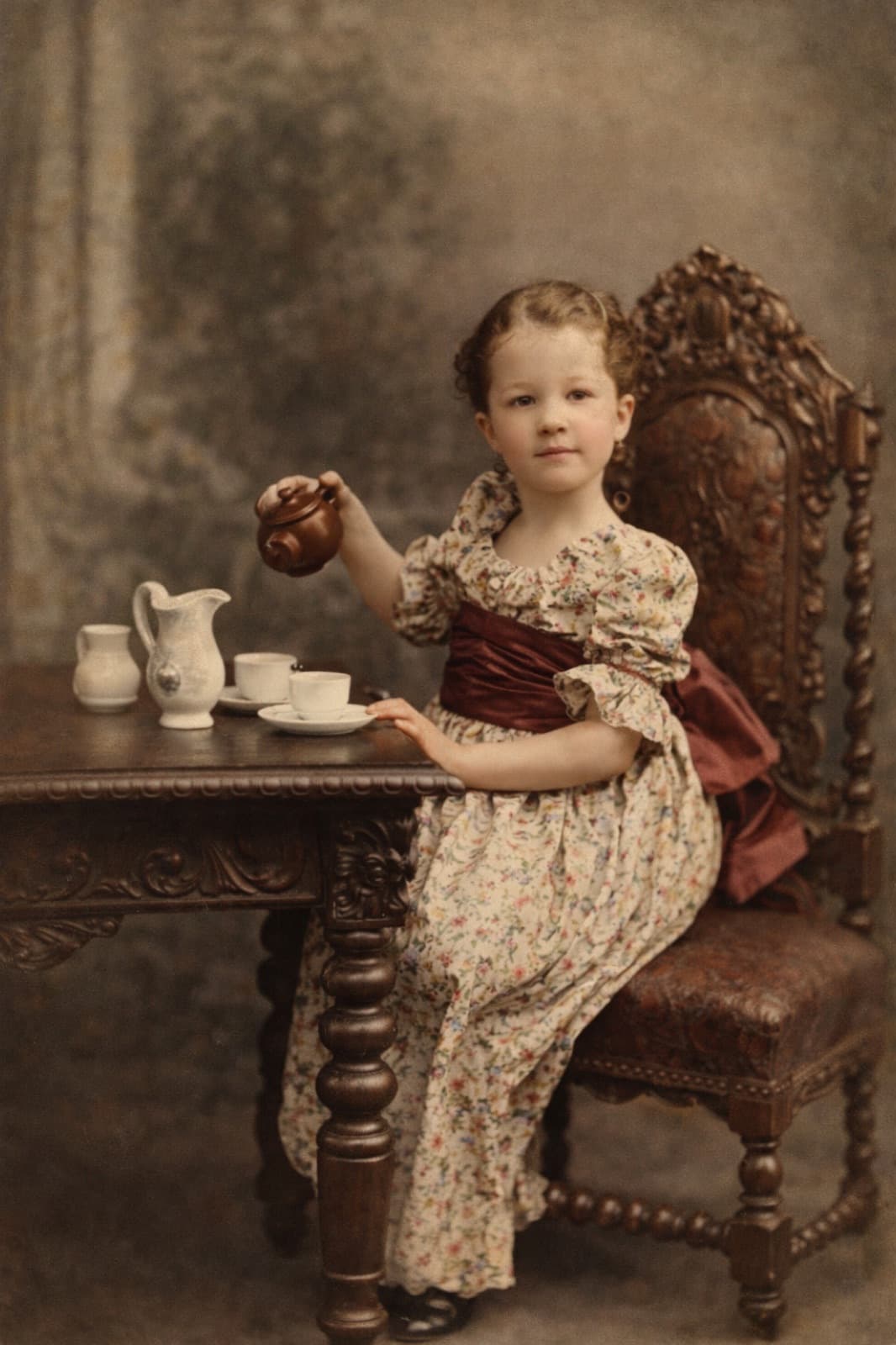
Amazing Photo Restoration Before and After: Real Examples
See stunning photo restoration before and after examples. Real AI-powered transformations of damaged, faded, and old photos.

Seeing Is Believing: Real Photo Restoration Transformations
Words can describe what AI photo restoration does. Technical articles can explain the neural networks behind it. But nothing communicates the power of modern photo restoration like seeing the before and after results side by side. The transformations are often so dramatic that people assume the restored version is a completely different photograph.
It is not. Every restored image in this article started as a damaged, faded, or deteriorated original. The AI did not create new photos. It uncovered and reconstructed what was already there, hidden beneath decades of damage.
This article walks through real-world restoration scenarios, describing the types of damage that commonly affect old photographs and the remarkable transformations that AI makes possible. Whether you are considering restoring your own family photos or simply curious about what current technology can achieve, these examples will show you what is possible in 2026.
Scenario 1: The Faded Family Portrait
The Before
A studio portrait from 1958. A young couple sits together, formally dressed, looking directly at the camera. The photo was displayed on a mantelpiece for years, exposed to indirect sunlight every day. Over the decades, the image has developed a heavy yellow-brown cast. Contrast is severely reduced. The man's dark suit has faded to a muddy brown-gray. The woman's face has lost almost all detail, blending into the yellowed background. You can see they are there, but their expressions are unclear, their features indistinct.
The Restoration Process
The first step was enhancement to correct the color cast and restore contrast. The AI identified the yellow-brown shift and recalculated what the original tones would have looked like. Instantly, the background regained its original neutral tone. Skin tones emerged from the yellow haze. The man's suit returned to deep black.
Next, face restoration sharpened both faces. The woman's smile became clearly visible. The man's eyes regained their sharpness. Facial features that were buried under low contrast reappeared with remarkable clarity.
The After
The restored portrait looks like it was scanned from a well-preserved original. Skin tones are natural. Facial expressions are clear and emotionally readable. The contrast between the subjects and the studio background creates the depth that the photographer originally intended. A photo that had become essentially unviewable is now a beautiful family heirloom.
If your family portraits have similar fading issues, our guide on how to fix faded photos explains the complete process step by step.
Scenario 2: The Scratched Childhood Photo
The Before
A 4x6 print from 1983 showing two children playing in a backyard. The photo was stored loosely in a drawer for decades, and the surface is covered in fine scratches and several deep creases. One crease runs directly across the older child's face. There are dust spots embedded in the surface, and a corner of the print has been bent and cracked. The image beneath the damage is relatively well-preserved in terms of color and exposure, but the damage makes it difficult to enjoy.
The Restoration Process
Scratch removal was the primary feature needed here. The AI detected and mapped every scratch, crease, and dust spot on the image. For the fine surface scratches, the AI seamlessly filled the damaged pixels with surrounding image data. For the deep crease across the child's face, the process was more complex. The AI used its understanding of facial anatomy to reconstruct the portion of the face hidden beneath the crease.
After scratch removal, a light enhancement pass improved the slightly soft focus typical of consumer cameras from the early 1980s.
The After
The scratches are completely gone. The crease across the face has been filled with natural-looking facial detail. The dust spots have vanished. The two children are clearly visible, their expressions captured in a moment of genuine joy. The photo can now be reprinted, framed, or shared digitally without the distracting overlay of damage.
Scenario 3: The Water-Damaged Wedding Photo
The Before
A wedding photograph from 1971, damaged when a pipe burst in the room where the photo album was stored. The bottom third of the image has heavy water staining. The bride's dress, which should be the visual focal point of the image, is obscured by brownish-white water marks. The left side of the image shows where the photo stuck to the album page and was pulled away, leaving a section where the emulsion has been partially torn off. The faces of the couple in the upper portion are relatively intact but slightly affected by moisture.
The Restoration Process
This photo required the full toolkit. First, scratch and stain removal addressed the water marks, treating them like extensive surface damage. The brown staining across the dress was identified and removed, revealing the underlying image data beneath.
For the torn emulsion area on the left side, where original image data was physically missing, the Recreate feature generated new content based on the surrounding context. The AI inferred what the missing area likely contained based on the visible portions of the scene and filled it in with plausible detail.
Face restoration refined the couple's faces, correcting the slight softness from moisture exposure. Finally, enhancement brought the overall quality up to a clean, balanced result.
The After
The wedding photograph has been transformed. The bride's dress is visible and clean. The water staining is gone entirely. The torn section blends seamlessly with the rest of the image. The couple's faces are clear and expressive. A photo that seemed beyond saving has become displayable, shareable, and cherished again.
For more details on handling water-damaged photos specifically, see our step-by-step guide to restoring water-damaged photographs.
Scenario 4: The Black-and-White Grandparent Portrait
The Before
A formal portrait from 1945. An elderly woman in a dark dress sits in a wooden chair. The image is in good condition for its age: some mild fading and a few minor scratches, but the overall quality is remarkably preserved. The subject's face is sharp and detailed. The photograph is black and white, as virtually all consumer photography was at the time.
The Restoration Process
Minor scratch removal cleaned up the few surface blemishes. Enhancement improved the contrast slightly, deepening the shadows and brightening the highlights. Then came the dramatic transformation: colorization. The AI analyzed the image, identified the subject, her clothing, the wooden chair, and the draped background, and added historically plausible color to every element.
The After
The woman's face now shows warm, natural skin tones. Her eyes have a gentle brown color. The dark dress is rendered in a deep navy blue. The wooden chair shows rich brown tones. The background takes on a soft, warm beige that is consistent with studio photography of the era.
The transformation is remarkable not just technically but emotionally. In black and white, the portrait is a historical document. In color, it is a person. The psychological distance collapses, and you feel as though you are looking at someone you could know.
If you are interested in colorizing your own family photos, our complete guide to colorizing old family photos covers the process in detail.
Scenario 5: The Severely Damaged Heritage Photo
The Before
A photograph from approximately 1920. The subject is a young man in military uniform. The photo has suffered extensive damage: a large tear runs diagonally across the upper right corner, removing a section of the background and part of the subject's shoulder. There are heavy creases throughout. The surface shows chemical spotting from improper storage. The image has faded to a sepia tone with very low contrast. And yet, the face, the most important element, is partially visible beneath all the damage.
The Restoration Process
This photo required every available restoration feature applied in sequence. Scratch removal first addressed the creases, chemical spots, and surface damage. The Recreate feature then tackled the tear, generating the missing corner with background and shoulder detail that matched the rest of the image. Face restoration clarified the young man's features, bringing sharpness and definition to eyes, nose, and jawline that were barely visible in the damaged original. Enhancement corrected the fading and contrast. Finally, optional colorization added life to the military uniform, skin, and background.
The After
From a photo that appeared to be beyond saving, the restoration recovered a clear, detailed portrait of a young soldier. His face is recognizable. His uniform is intact. The tear is invisible. The overall image quality, while not matching a modern photograph, is dramatically and unequivocally better than the damaged original. For a family that thought this photo was lost, the restoration means the world.
What Makes These Transformations Possible
The technology behind these results is the product of years of AI research and training. To understand the neural networks and algorithms that power modern photo restoration, read our article on how AI photo restoration technology works.
The key insight is that damage and image content are fundamentally different things, and modern AI has learned to distinguish between them with extraordinary precision. Scratches have different statistical properties than intentional lines. Fading follows predictable chemical patterns that can be reversed mathematically. Missing sections can be inferred from surrounding context. The AI is not guessing. It is applying learned knowledge from millions of examples.
What You Can Expect from Your Own Photos
Every photograph is unique, and results vary based on the type and severity of damage, the quality of the original scan, and the specific combination of problems present. However, these general expectations hold true:
- Mildly damaged photos (slight fading, minor scratches): expect near-perfect restoration
- Moderately damaged photos (heavy fading, multiple scratches, some staining): expect dramatic improvement with natural-looking results
- Severely damaged photos (tears, missing sections, heavy water damage): expect significant recovery, though some reconstructed areas may show subtle differences from the original
- Nearly destroyed photos (extensive missing data, extreme damage): expect partial recovery that is still meaningful and emotionally valuable
The best way to know what results are possible with your specific photos is to try. Modern AI restoration takes seconds per photo and costs very little per attempt.
Your Photos Deserve This
Somewhere in your home, there are photographs that have been slowly deteriorating for years or decades. Every day they are not restored, they lose a little more. Fading continues. Paper becomes more brittle. The memories they hold become slightly harder to see.
The before-and-after transformations shown in this article are not exceptional. They are representative of what AI photo restoration routinely achieves in 2026. Your photos, whatever their condition, are likely more recoverable than you think.
Restory offers six specialized AI features designed for exactly these kinds of transformations. From minor fading corrections to generative reconstruction of severely damaged images, every tool you need is available in a single app with flexible, affordable pricing.
<!-- cross-links -->Related Reading
Compare in depth:
Other alternatives:
Download Restory and see your own before and after. The first restored photo is always the most emotional. The one where you realize that the memory you thought was lost is actually still there, waiting to be uncovered.
Restore your photos with Restory
AI to colorize, repair, and animate old photos. 32 languages, free trial.
Try Restory